Buses from Troodos: routes, times and tickets
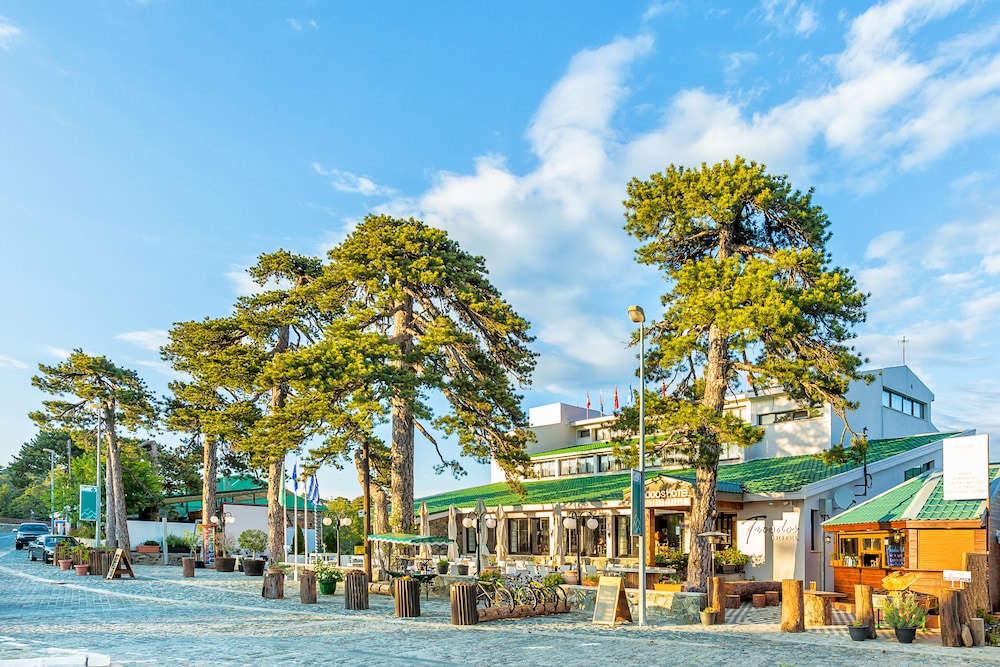
The main departure point is Troodos Square, where the local bus station sits beside the tourist office. Intercity Buses run route 64 to Limassol via Platres and Trimiklini, with roughly six services a day in summer (May–October) and four in winter, taking about 1 hour 40 minutes. The first leaves around 7:30am, the last around 5:30pm. A single ticket costs about €3–4; buy from the driver. Buses are modern, air-conditioned and rarely full outside August weekends.
If you are coming from Nicosia, catch the 405 from Solomos Square to Troodos (about 2 hours) and connect at the square. From Paphos, take the 631 to Polis, then the 632 up to Troodos — a longer, scenic route. Check the Intercity Buses website for seasonal timetables, as the winter schedule drops some midday runs. I would book the 7:30am departure to maximise daylight and avoid the afternoon heat when you reach the coast.
What you see on the way down
The bus climbs out of Troodos through black pine and cedar forest, passing the turn-off for Mount Olympus (1,952m) and the Chionistra ski slopes. Around the 20-minute mark you reach Prodromos, a village of stone houses and apple orchards. Look left for the abandoned Berengaria Hotel, a haunting shell from the 1930s. The road then winds through Platres, a summer resort since British colonial times, with shady walks to Caledonia Falls. The bus stops here for a few minutes — enough to grab a freddo at a kiosk.
From Platres the descent sharpens: hairpin bends through Trimiklini, where you can see the Kouris Dam, then the landscape turns from pine to vine and carob. As you approach Limassol, the road widens and the sea appears. The whole journey is a lesson in Cyprus’s vertical geography. Sit on the right side (facing forward) for the best valley views. In spring (March–April), the almond and cherry blossom adds colour; in autumn, the light is softer and the bus is quieter.
Arriving in Limassol: where to get off and what to do
The bus terminates at Limassol’s central bus station on Franklin Roosevelt Avenue, a 10-minute walk from the old port and castle. From there, local buses (30, 30A) run along the seafront to the Molos promenade and Dasoudi Beach. If you are heading to the ancient site of Amathus, take bus 30 east. For a quick bite, walk to the old town’s Saripolou Square for sheftalia or halloumi sandwiches. The city is walkable, but the seafront is long — expect 30 minutes on foot from the station to the marina.
Must-sees: Limassol Castle, the Carob Mill complex and the promenade’s sculpture park. Skip the overpriced seafront restaurants and eat one street back on Zik Zak or Agkyras Street. If you have time, the municipal beach at Dasoudi is clean and free, with showers. For a coffee with a view, the rooftop of the old town’s Rialto Theatre is a local secret. I would book a hotel near the old town or Molos to avoid needing another bus after a long day.
Return trip and practical tips
The last bus back to Troodos leaves Limassol station at 4:30pm (5:30pm in summer), arriving after dark. Alternatively, stay overnight in Limassol — the 7-day funnel shows 643 hotel views but only 3 checkouts, so there is clearly interest. Hotels around Molos and the old town start from around €60–80 for a double in shoulder season. From Limassol, morning buses to Troodos leave at 6:45am and 10:30am. If you miss the last bus, a taxi to Troodos costs €50–60 — avoid that by checking the timetable.
Buy a return ticket if you are doing a day trip; it saves a little and guarantees a seat on the last bus. Carry water and snacks as the kiosks at Troodos Square are limited. The bus has no toilet, but the journey is short enough. In winter, check for snow closures on the Prodromos road. For the best experience, travel on a Tuesday or Wednesday when the buses are quieter and the mountain villages are not crowded with weekenders.
Where to stay
Hotels in Troodos
Good to know
Questions, answered
How much does the bus from Troodos to Limassol cost?
A single ticket costs about €3–4, payable to the driver in cash. Return tickets are slightly cheaper. Children under 6 travel free. Cards are not widely accepted on intercity buses, so carry euros.
How long is the bus journey from Troodos to Limassol?
The direct Intercity Buses route 64 takes about 1 hour 40 minutes. If you take a local bus with changes, it can take over 2 hours. The scenic route via Platres is the most direct.
What is the first and last bus from Troodos to Limassol?
In summer, the first bus leaves Troodos Square at around 7:30am, and the last at about 5:30pm. In winter, services are reduced to four a day, with the last bus around 4:30pm. Always check the current timetable.
Can I do a day trip from Troodos to Limassol and back by bus?
Yes, but you need an early start. Catch the 7:30am bus, spend 4–5 hours in Limassol, and return on the 4:30pm or 5:30pm bus. In winter, the last bus is earlier, so plan accordingly.
Where does the bus stop in Limassol?
The bus terminates at Limassol central bus station on Franklin Roosevelt Avenue, near the old port. From there, local buses go to the promenade and beaches. The old town is a 10-minute walk.
Is the bus from Troodos to Limassol scenic?
Very. The route passes through pine forests, the village of Platres and the Kouris Valley. Sit on the right side for the best views. In spring, the almond blossom adds colour; in autumn, the light is clear.
What should I bring on the bus?
Water, snacks, cash for the fare, and a light jacket even in summer as the air-conditioning can be strong. A camera for the views. No need for a printed ticket.
Are there toilets on the bus?
No, the intercity buses do not have toilets. Use the facilities at Troodos Square or Limassol station before boarding. The journey is under 2 hours, so it is manageable.
Doing good is the business: every booking through Stay Cyprus funds one verified tonne of carbon removal — same room, same price, no markup.
Search stays