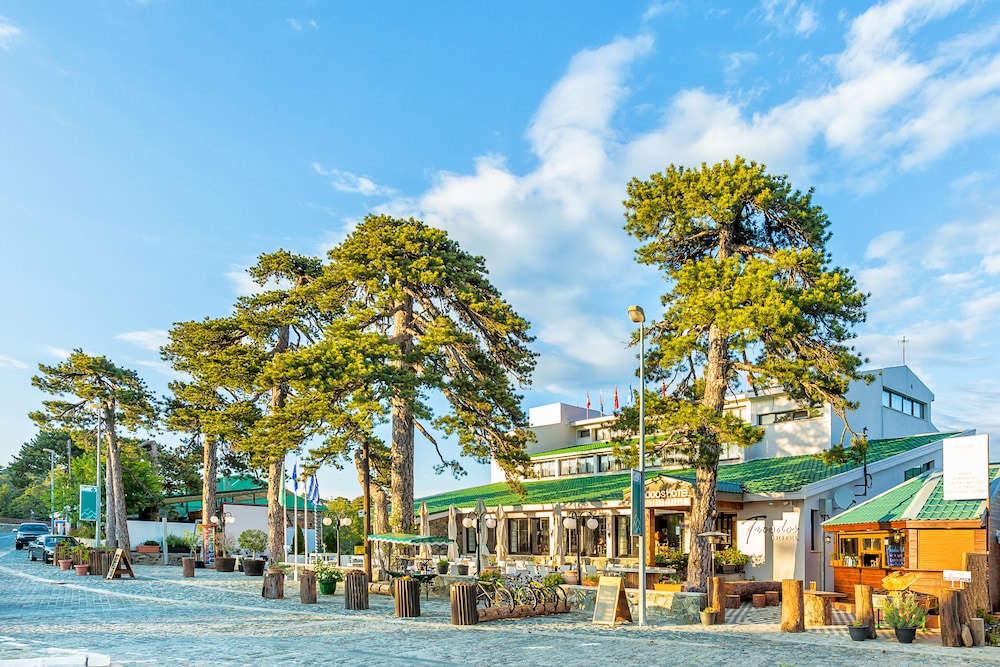
Start in the foothills: Kakopetria and Galata
Kakopetria sits at the junction of the Solea and Kargotis valleys, about 55 km southwest of Nicosia on the B9, roughly an hour's drive. The old town's stone lanes carry a handful of small bakeries and coffee shops, and this is where you should buy your first provisions. Expect to pay a few euros for a warm tyropita or a loaf of village bread, and less for a bag of rusks. Arrive before mid-morning. After that, the coach groups land, parking gets awkward, and the shelves are thinner. Galata, five minutes down the road, is quieter and has the same goods.
Bakeries here follow the old pattern: a wood-fired oven, a short list of breads, and trays of glyko tou koutaliou — spoon sweets of walnut, cherry or quince — sold by the jar. Buy the sesame-crusted village loaf rather than the sliced supermarket kind; it keeps for two days in a car boot and travels better than pastries. If you want to settle in rather than push on, Kakopetria makes an easy base: line up a small hotel in Kakopetria before you set out, and use the village as a launch pad for the higher Troodos rather than driving up and back from the coast in one day.
The high villages: Pedoulas, Moutoullas and Prodromos
Above the Solea valley the road climbs through Pedoulas, then Moutoullas with its trout farm, and on to Prodromos at around 1,400 m. Pedoulas is the best single stop for bakery provisions in this band: two or three small shops on the main street sell fresh bread, flaounes in spring, and packets of local nuts. Prices stay modest by coastal standards. The honey and the apple produce from Prodromos are worth the boot space. Bring cash, since card machines in these villages are inconsistent and small purchases are sometimes awkward.
Timing matters more than you would think. Many village ovens bake in the morning only and sell out by early afternoon; Sunday can be the exception, but some shops close entirely. Go early and plan a picnic rather than a sit-down lunch. Buy bread, halloumi, olives, tomatoes from a roadside stall, and eat at a picnic bench near the Prodromos-Troodos road. In winter, the same villages sit in snow and some bakeries shutter for weeks. Check opening before committing to a mountain night.
The wine villages: Omodos, Arsos and Vasa
South of the Troodos ridge, Omodos is the busiest stop, its stone-paved lanes lined with bakeries, sweet shops and wine cellars. It is also the most touristed, so prices edge up and the quality varies. My advice: skip Omodos for the bakery and buy there only what catches your eye, then drive fifteen minutes to Arsos or Vasa, where the shops are aimed at residents and most things cost less. A village loaf, a handful of olives and some local cheese make a proper lunch for a few euros. The road between them is pretty and quiet, and you get a view over the vineyards without the coach traffic.
Because this route is a car trip, where you sleep shapes how much you can eat in a day. If you plan to work the wine villages and the Mount Olympus trails over several days, arrange a hotel in Platres or Troodos first, then build the food stops around it — a central bed saves you an hour of driving each evening. Platres has more late-afternoon openings than the high villages, while Troodos itself is quiet and cool and handy for early starts. In my view Platres is the better base for the wine villages.
The eastern approach: Agros and the Pitsilia
Agros, reached via Limassol in about an hour and a half, is famous for roses and cured meats, and it has one of the better village bakeries in the Pitsilia. The rose products are the draw, but the plain bread and the spiral pastries are what I would buy. Further along, the villages of Kyperounda and Pelendri mark the transition toward the high ridge; each has a small shop or two rather than a dedicated bakery, so don't count on finding bread after lunchtime. Halloumi, cured sausage and village wine are all reliable buys and keep well in a cool box.
Fuel is worth a thought: stations become sparse above 1,000 m, so fill up in Limassol, Nicosia or Troodos before climbing. Buses do run to Kakopetria and Platres, but timetables are thin and most bakery-hopping is impractical without a car. Late spring and early autumn are the best months; July and August are hot enough that a picnic at midday is unpleasant. In October the villages have their grape harvest, which is the liveliest time to wander.
Related articles
Where to stay
Hotels in Troodos
Good to know
Questions, answered
What is the best time of year to visit the Troodos villages?
Late spring, from April to June, is ideal, as are September and October. Wildflowers fill the slopes in spring and the villages are comfortably cool. July and August are hot, and January and February can bring snow that closes high roads and shuts some bakeries.
Do I need a car to eat my way around the Troodos bakeries?
A car is strongly recommended. Buses serve Kakopetria, Platres and a few larger villages, but services are infrequent and mountain roads demand time. With your own vehicle you can reach small village shops and picnic spots that public transport simply doesn't reach.
How much cash should I carry for village bakeries?
Carry enough small notes and coins for a few days of provisions. Card machines in mountain villages can be unreliable, and small purchases below a certain amount are often cash-only. Budget modestly and treat every purchase as a small local transaction rather than a fixed menu price.
Which mountain village makes the best base for a Troodos food trip?
Platres, in my view, is the most practical base, with evening openings and easy access to the wine villages and the Mount Olympus trails. Kakopetria suits a first or last night near Nicosia, and Troodos village is best for early trail starts rather than evening meals.
What should I actually buy from a village bakery?
Prioritise the crusty village loaf, sesame bread, tyropita and olives; these travel well and make a solid picnic. Spoon sweets and honey are good gifts. Skip delicate cream pastries if you are driving far, because the mountain heat will spoil them before you stop for lunch.
Is Omodos worth visiting for the bakeries?
Omodos is pleasant but touristed, and prices are higher than nearby villages. Buy only what appeals and then drive fifteen minutes to Arsos or Vasa, where the shops serve residents and cost less. The quieter wine-village roads are more rewarding for food shopping.
Can I rely on bakeries being open in the high villages?
No. Many village ovens bake in the morning and sell out by early afternoon, and some close on Sundays or for weeks in winter. Go early, ask at your accommodation about local opening patterns, and keep basic provisions in the car as a backup.
What should I plan to eat besides bakery bread in the Troodos?
Build a picnic from village shops: halloumi, olives, tomatoes from roadside stalls, and cured meats in Agros. In cooler months try the trout farm above Moutoullas. A cool box keeps everything fresh if you are moving between villages throughout the day.
Doing good is the business: every booking through Stay Cyprus funds one verified tonne of carbon removal — same room, same price, no markup.
Search stays